
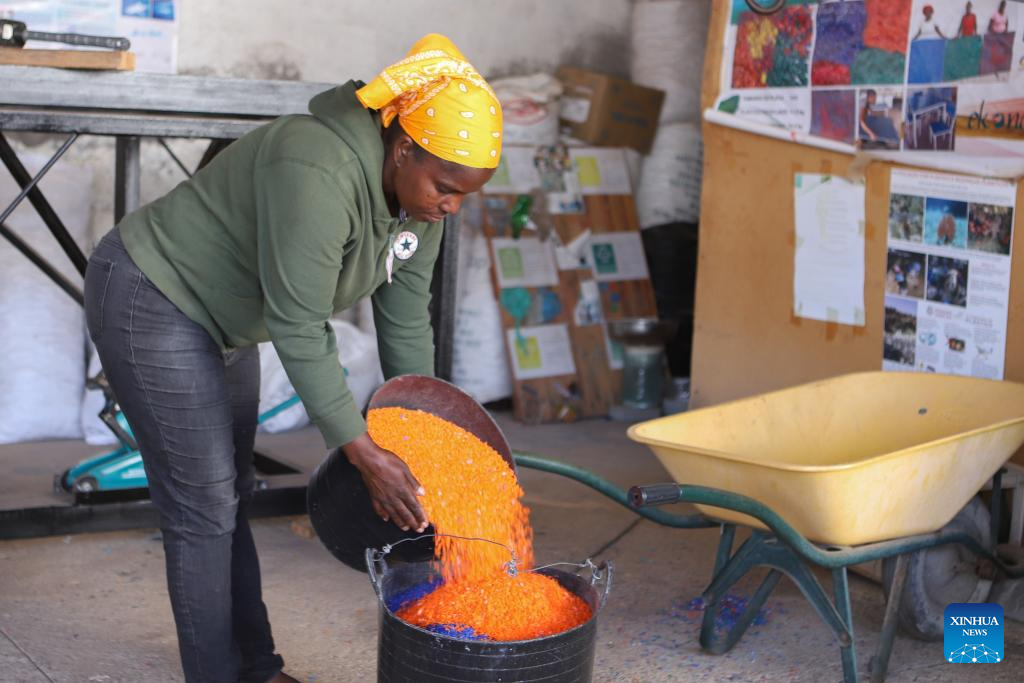
A worker processes recycled plastic into pellets, preparing the materials for the next stage of heat pressing, at a community microenterprise in Praia, Cape Verde, on March 19, 2026. In the outskirts of Praia, a community microenterprise committed to environmental protection and recycling is engaged in turning discarded plastic and glass into school desks, chairs and other useful items. Since its establishment in 2019, it has processed waste through sorting, shredding, heat pressing and restoration, giving discarded materials a new life in classrooms. (Photo by Elton Monteiro/Xinhua)
PRAIA, March 20 (Xinhua) -- In Sao Francisco, on the outskirts of Cape Verde's capital Praia, a community recycling project is turning waste into school desks and chairs, helping improve classroom conditions while cutting pollution.
At the center of the effort is Ekonatura, a community-based micro-enterprise located about 12 km from Praia.
Using discarded plastic and glass collected by residents and partner companies, the project gives waste a second life through practical products for schools and communities.
"The idea was to promote sustainable waste management, protect the environment and improve the well-being of people in the community," Joao Ferreira, manager of Ekonatura and president of the local community association, told Xinhua.
Launched in 2019, the initiative later developed into a community-based business. Today, the impact is visible in Sao Francisco, where cleaner streets reflect a growing awareness of recycling and waste management.
According to Ferreira, one of the project's main activities is restoring damaged desk and chair frames by replacing wooden parts with components made from recycled plastic.
"We re-use damaged desk structures and replace the backrests and bases with materials made from recycled plastic," he said. "This increases durability and reduces the need to use wood."
In addition to school furniture, Ekonatura also produces trash bins, flower pots, paving blocks and other items, promoting circular economy solutions adapted to local needs.
The project also carries out awareness activities in schools to teach children the importance of recycling and proper waste disposal.
With an average recycling capacity of about 100 kg of glass and plastic per hour, the initiative combines environmental protection, social inclusion and practical support for education, showing how discarded waste can be turned into useful community resources.
Despite growing demand from schools, Ferreira said, the company still faces shortages of funding and equipment.
"We have limitations in financial resources and machinery, and that affects our response capacity," he said. "But with more support and partnerships, this project can expand to the national level." ■
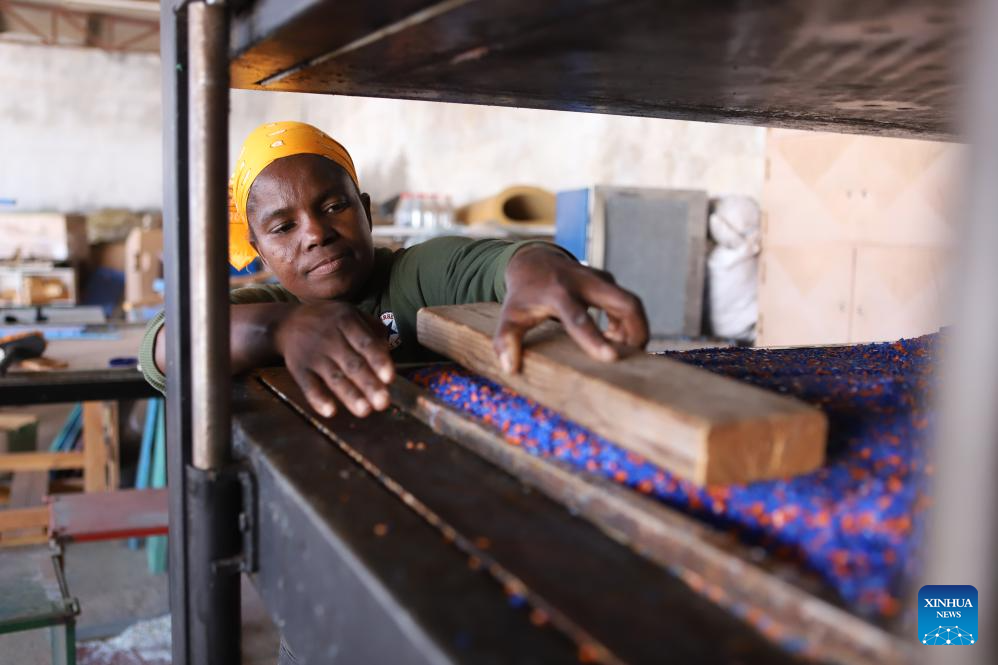
A worker arranges a sheet made from recycled plastic at a community microenterprise in Praia, Cape Verde, on March 19, 2026. In the outskirts of Praia, a community microenterprise committed to environmental protection and recycling is engaged in turning discarded plastic and glass into school desks, chairs and other useful items. Since its establishment in 2019, it has processed waste through sorting, shredding, heat pressing and restoration, giving discarded materials a new life in classrooms. (Photo by Elton Monteiro/Xinhua)
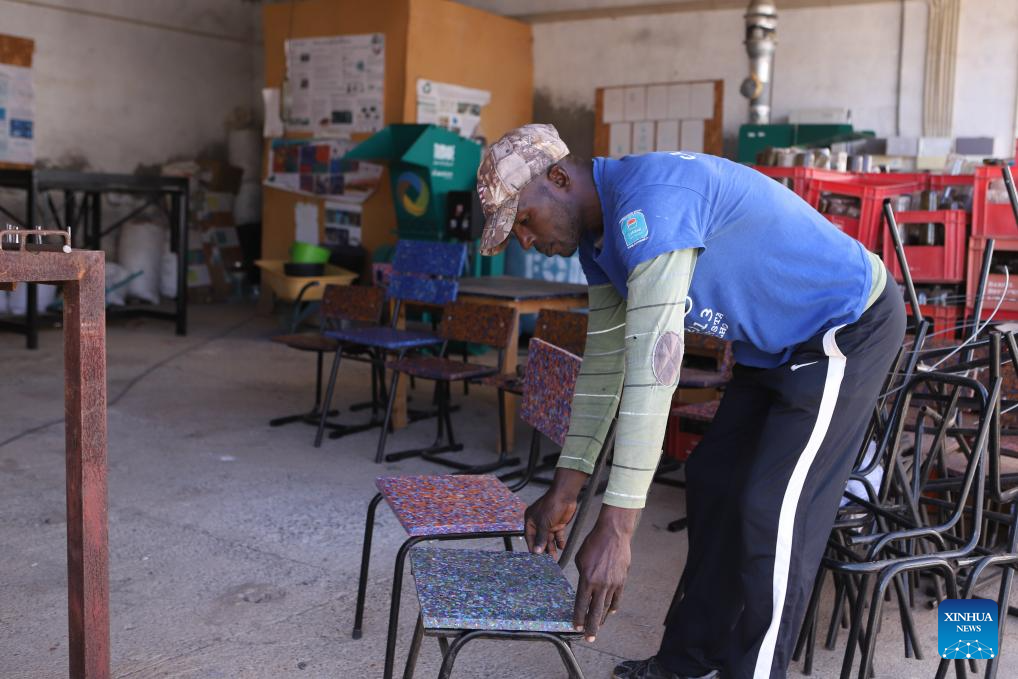
A worker arranges chairs for students restored with recycled materials at a community microenterprise in Praia, Cape Verde, on March 19, 2026. In the outskirts of Praia, a community microenterprise committed to environmental protection and recycling is engaged in turning discarded plastic and glass into school desks, chairs and other useful items. Since its establishment in 2019, it has processed waste through sorting, shredding, heat pressing and restoration, giving discarded materials a new life in classrooms. (Photo by Elton Monteiro/Xinhua)
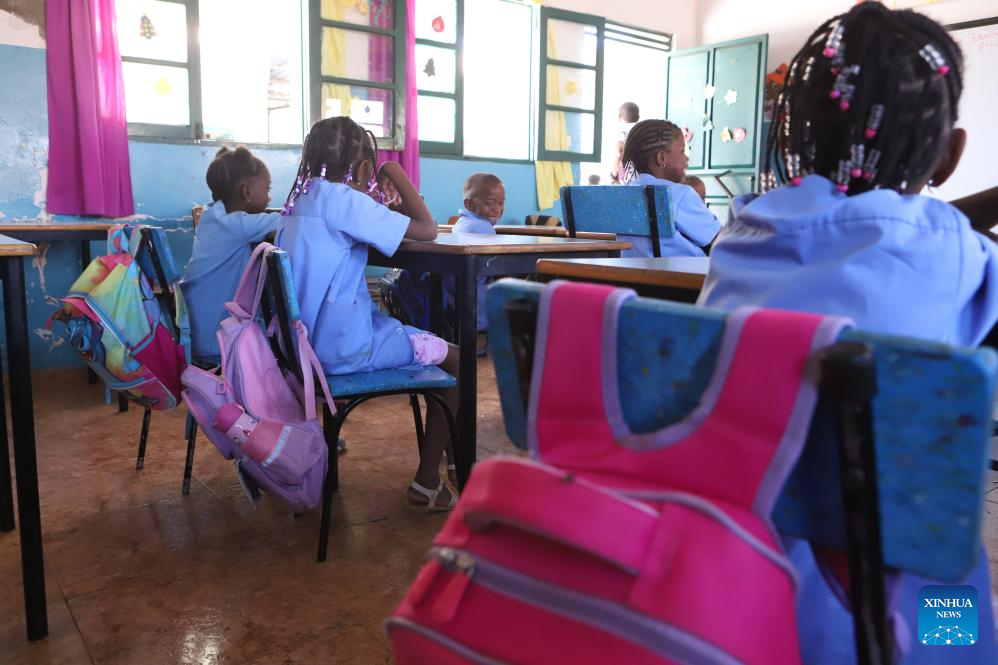
Students attend class using desks and chairs restored with recycled materials at a school in Praia, Cape Verde, on March 19, 2026. In the outskirts of Praia, a community microenterprise committed to environmental protection and recycling is engaged in turning discarded plastic and glass into school desks, chairs and other useful items. Since its establishment in 2019, it has processed waste through sorting, shredding, heat pressing and restoration, giving discarded materials a new life in classrooms. (Photo by Elton Monteiro/Xinhua)